
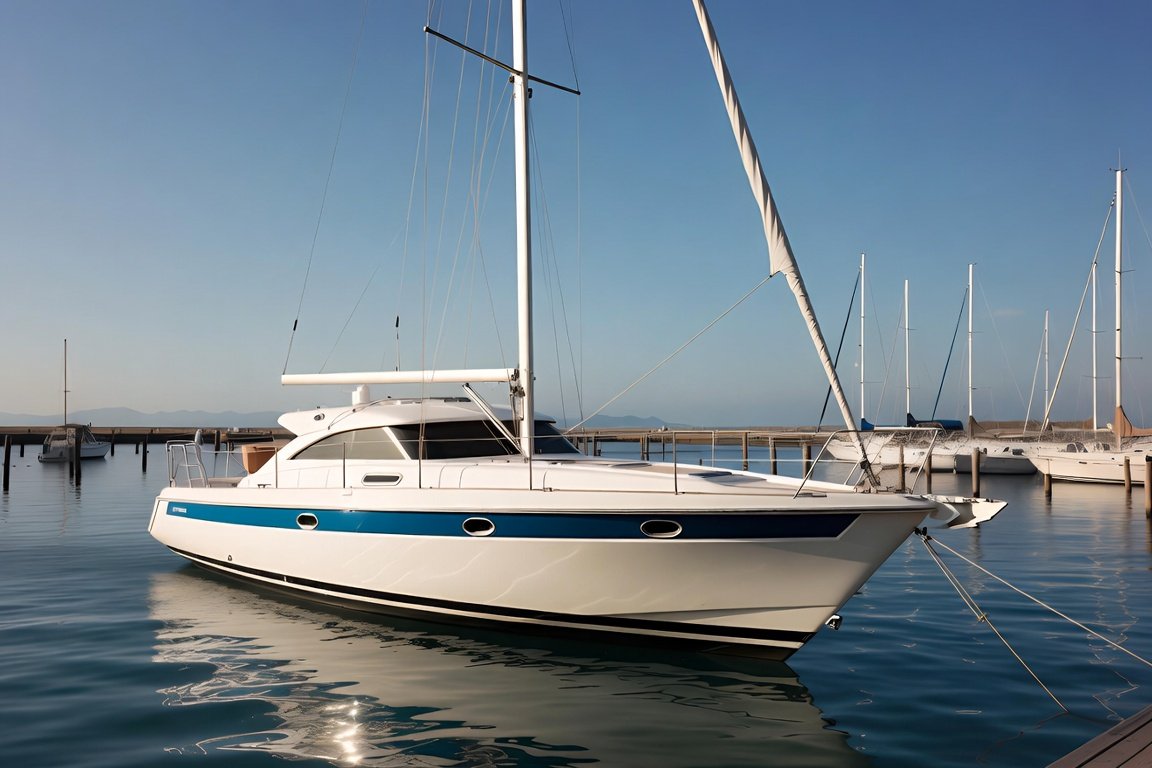
Not every yacht needs to be 100 feet long with a helicopter pad. For most first-time buyers, the smartest entry point into yacht ownership is a vessel between 25 and 40 feet — small enough to manage confidently, large enough to feel like a real yacht.
Key Takeaways
- Industry classification generally defines a “small yacht” as any vessel between 20 and 40 feet (6–12 metres), sometimes extending up to 79 feet under broader “pocket yacht” definitions
- The sweet spot for first-time buyers is widely considered to be the 30–40 foot range, balancing comfort, handling ease, and total ownership cost
- Total annual ownership costs typically run 5–10% of a small yacht’s purchase price, covering maintenance, insurance, dockage, and anti-fouling
What Actually Counts as a “Small Yacht”?
The term “small yacht” doesn’t have one universal definition, but industry classification standards provide useful boundaries. According to brokerage market classification standards referenced by IYBA and European brokers, small motor yachts generally fall in the 20–40 foot (6–12 metre) range. Some brokerages extend the “small” or “pocket yacht” category considerably further, defining any vessel under 79 feet (24 metres) as small relative to true superyachts, while reserving “mini yacht” specifically for the 20–40 foot bracket.
Within that broader small-yacht category, further distinctions matter. Vessels in the 20–30 foot range are often labeled “mini yachts,” best suited to day trips and short coastal outings, while 30–40 foot vessels offer meaningfully more space and amenities, including small cabins, galleys, and sleeping quarters, making them viable for longer, multi-day trips. Beyond 40 feet, most mariners consider a vessel to have crossed into “regular yacht” territory, complete with the crew requirements and running costs that implies.
Why 30–40 Feet Is the Beginner Sweet Spot
If you’re buying your first boat, size is the single biggest decision — and it’s also where new buyers most often overreach. Industry guidance consistently points to the 30–40 foot range as the ideal starting point, striking a balance between family-trip capacity and manageable, confidence-inspiring handling.
The financial logic behind this recommendation is specific and worth understanding before you shop. According to NMMA industry statistics, once a yacht exceeds 40 feet, average maintenance costs increase by roughly 35–60%, alongside significantly steeper berthing requirements. One industry cost breakdown illustrates just how quickly this adds up: stepping from a 35-foot boat to a 45-foot boat can mean roughly $2,400 more in annual docking fees, $1,800 in additional insurance, $3,000 in extra fuel costs, and $2,500 in added maintenance labor nearly $9,700 in extra annual costs for space that may only get used a few weeks a year.
Marina costs alone can vary dramatically by size. In Miami, for example, an annual berth for a 40-foot yacht can run between $12,000 and $25,000, while a 30-foot berth often costs roughly half that amount.
Also Read: History Supreme Yacht: Is the “World’s Most Expensive Yacht” Real or an Elaborate Hoax 2026?
Motor Yacht or Sailboat? Understanding Your Two Main Paths
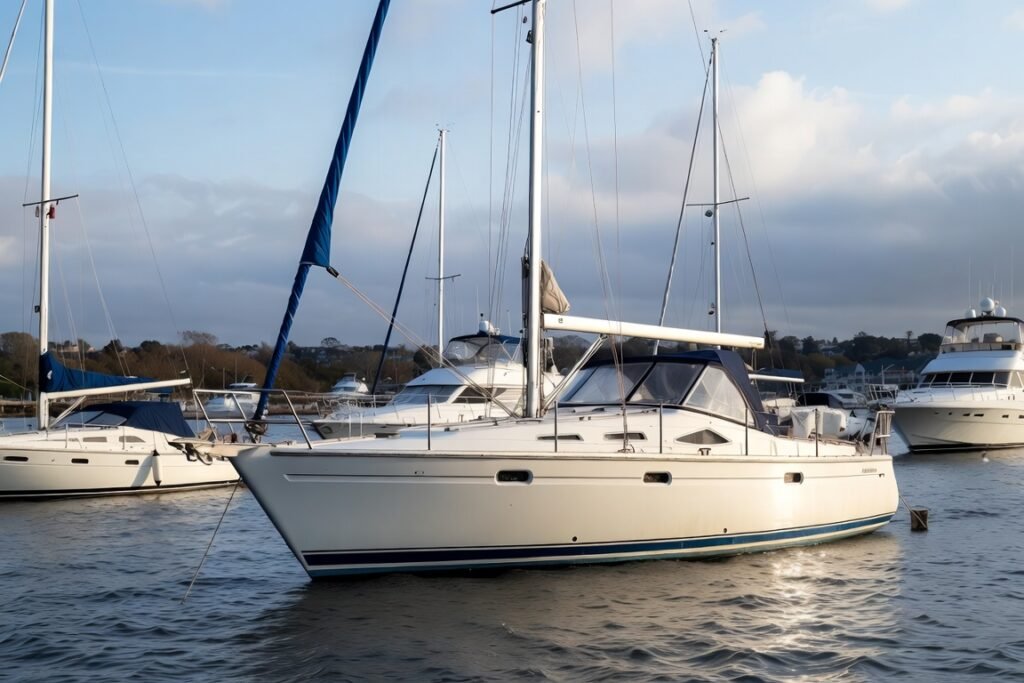
Small yachts generally split into two categories: motor yachts and sailboats. Motor yachts, powered by an engine, tend to suit buyers prioritizing speed and convenience, while sailboats offer a more traditional, wind-powered, and environmentally lighter way to cruise. Both categories are well represented in the 30–40 foot range, and the right choice ultimately comes down to how you envision spending your time on the water — active sailing versus straightforward, engine-powered cruising.
Among motor yacht subtypes, sport cruisers and entry-level flybridge yachts are the two hull types most frequently recommended for beginners, with 25–30 foot sport cruisers offering the lowest barrier to entry and easiest handling, and 30–35 foot flybridge models offering the best balance for families who want a bit more space without sacrificing manageability.
What a Small Yacht Actually Costs
Pricing for small yachts varies widely depending on age, brand, and condition, but general benchmarks are fairly consistent across brokerages. The average purchase price of a small yacht typically ranges from $50,000 to $500,000, with a $500,000 budget generally securing a well-equipped 20–40 foot vessel suitable for family outings, short cruises, and fishing trips. On the more compact end, “mini yacht” pricing tends to fall between roughly $250,000 for entry-level or used models and $500,000-plus for premium mini yachts with high-end finishes and advanced systems.
Beyond the purchase price, ongoing costs are the figure most first-time buyers underestimate. A widely cited industry rule of thumb puts total cost of ownership at roughly 5–10% of the yacht’s purchase price per year, covering maintenance, mooring, insurance, and anti-fouling treatment. For a $300,000 small yacht, that translates to somewhere between $15,000 and $30,000 annually just to keep the boat running and properly maintained — a figure worth budgeting for well before signing a purchase agreement.
Best Small Yacht Models to Consider in 2026
While specific availability shifts year to year, several models consistently show up in beginner-focused buying guides for 2026:
Beneteau Antares 9 / Antares 11 — Efficient interior layout even at around 30 feet, with room for two berths, making it a practical, economical choice for short trips. The larger Antares 11 (36 feet) adds a swing-down gunwale that converts into a large swim platform, along with full home-style comforts.
Princess V40 — A British-built luxury sport yacht offering high-end interior finishes and cabin space that punches above its 40-foot length, striking a strong balance between size, ease of handling, and offshore capability, though buyers should note its maintenance costs run notably higher than entry-level competitors.
Ranger Tugs R-27 — At just under 32 feet, this trailerable pocket cruiser pairs a forward private stateroom and full galley with straightforward outboard power, making it a popular pick for buyers who want yacht-style comfort without inboard engine complexity.
Beneteau Oceanis 34.1 — For buyers leaning toward sailing rather than motor power, this 34-footer offers two private cabins along with a full galley, head, and dinette, giving it genuine overnighting capability in a compact package.
Across these recommendations, a recurring theme emerges: outboard-powered models tend to be favored for beginners specifically because outboards are mounted externally, easy to service, and simple to diagnose, compared to inboard engines, which involve cooling circuits, drive shafts, and more complex internal layouts that raise both maintenance costs and repair turnaround times.
Why This Matters: Common First-Time Buyer Mistakes
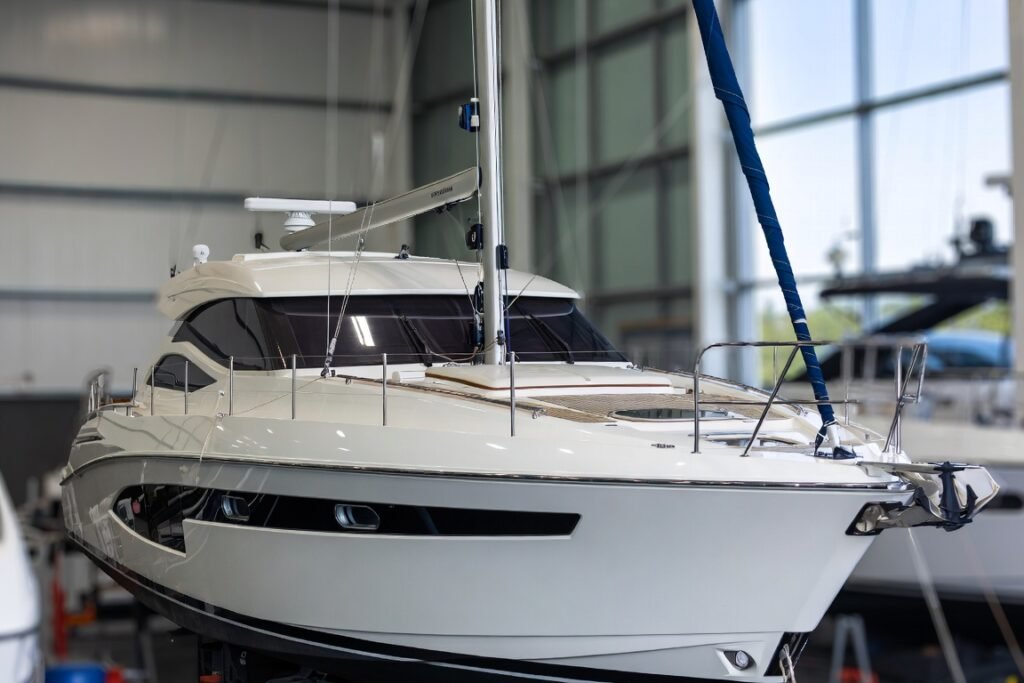
Understanding realistic size and cost expectations matters because the most common first-yacht mistake isn’t picking the wrong brand — it’s picking the wrong size. Buyers frequently start out wanting to buy a 50-foot-plus yacht immediately, reasoning that going bigger from the start avoids having to upgrade later. In practice, this approach tends to backfire: complex systems, higher insurance thresholds, and steeper berthing costs turn what should be an enjoyable hobby into an expensive management burden for someone without prior ownership experience.
There’s also a strong financial argument for buying used rather than new as a first yacht. According to the NMMA’s 2024 Industry Sales Report, used boats accounted for 78.3% of the year’s total sales of 858,798 vessels, with experienced buyers gravitating toward used models specifically to avoid the complexity and uncertainty of brand-new boat systems, provided maintenance records can be verified. A thorough professional survey and sea trial remain essential steps regardless of whether you buy new or used.
For buyers specifically considering long-distance travel, size still matters even within the “small yacht” category. Most experts agree that comfortably crossing open water requires a minimum of roughly 30 feet, with a transatlantic crossing — which can take anywhere from 10 days to three weeks best attempted only in a small yacht toward the larger end of that range, equipped with sufficient storage for extra fuel and provisions.
Also Read: Eclipse Yacht: Inside the World’s Most Secretive 162-Metre Superyacht
Docking, Storage, and Practical Logistics
Beyond purchase price and maintenance, practical logistics deserve equal attention. A typical 40–50 foot yacht requires a marina slip of at least 50–55 feet with 12–15 feet of beam clearance, and most coastal cruisers in this class carry drafts under 6 feet with engines rated between 200 and 800 horsepower all factors that directly affect fuel logistics, berth availability, and how flexible your cruising plans can realistically be.
First-time buyers are generally advised to prioritize a manageable hull design, easy access to parts and service networks, and strong resale value over flashier feature lists — a brand with wide dealer coverage reduces downtime and towing distances whenever repairs are needed, which matters considerably more in year two or three of ownership than it does on the showroom floor.
FAQ
What size is considered a “small yacht”?
Most industry classifications place small yachts in the 20–40 foot (6–12 metre) range, though some brokerages extend the definition up to 79 feet when distinguishing “small” from true superyachts.
How much does a small yacht cost to buy?
Purchase prices typically range from $50,000 to $500,000 depending on size, age, brand, and condition, with a $500,000 budget generally securing a well-equipped 20–40 foot vessel.
What’s the best yacht size for a first-time owner?
Industry guides consistently recommend the 30–40 foot range for beginners, offering enough space for family trips while remaining manageable to handle, dock, and maintain without a professional crew.
How much does it cost to maintain a small yacht each year?
Total ownership costs generally run 5–10% of the purchase price annually, covering maintenance, insurance, dockage, and anti-fouling treatment.
Can a small yacht cross the ocean?
Yes, though experts recommend a minimum of roughly 30 feet for comfortable ocean crossings, with larger vessels in the small-yacht range better suited to multi-week transatlantic journeys due to storage and stability needs.
Do small yachts require a licensed captain?
Generally no — most small and mini yachts under roughly 40–50 feet can be self-operated without a professional captain, though larger vessels toward the upper end of the range may require additional experience or licensing depending on local regulations.